
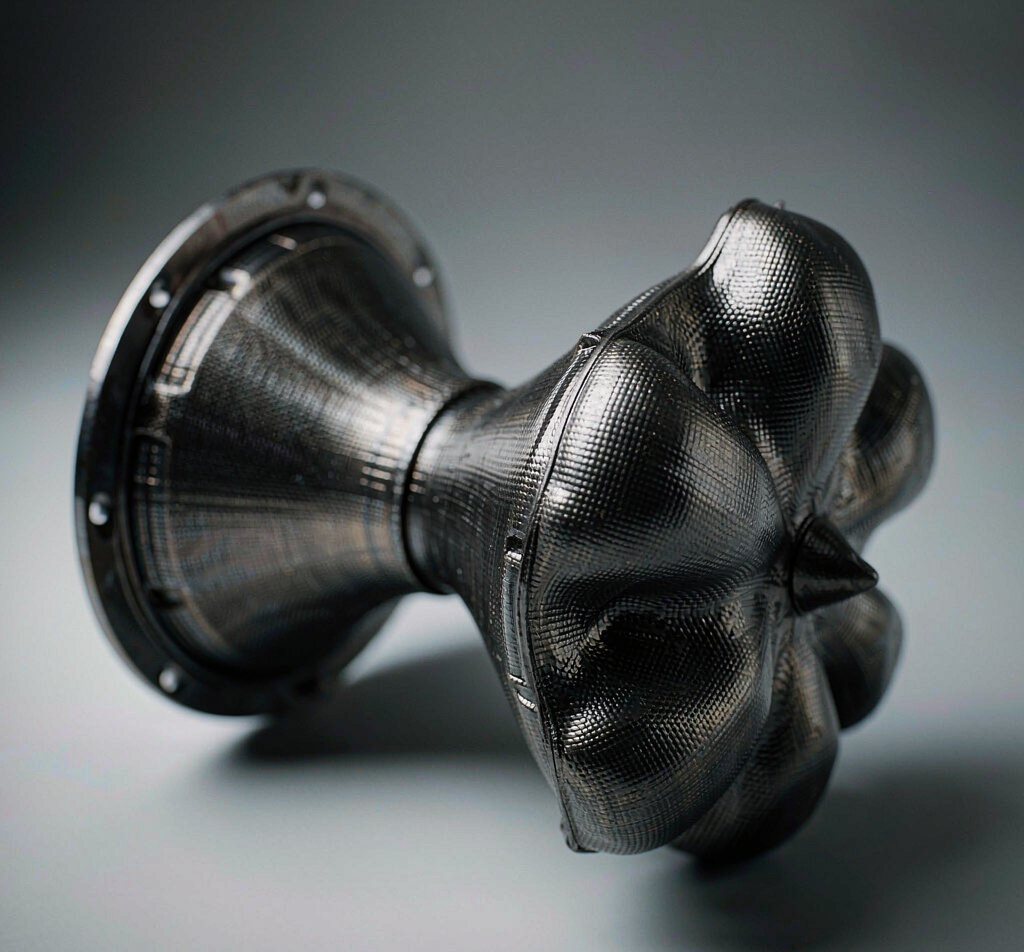
Application
Aviation
Replacing nickel-based superalloys with SiCf/SiC ceramic matrix composites reduces weight by 60%, raises temperature resistance by 200°C, cuts cooling air consumption, and improves thrust-to-weight ratio.
Material Adaptation & Solutions
Hot-section components of aero engines have long been constrained by the density and temperature limits of nickel-based superalloys. By replacing them with continuous silicon carbide (SiC) fiber-reinforced SiCf/SiC ceramic matrix composites (CMC), structural components achieve approximately 60% weight reduction and a 200°C increase in temperature capability, while reducing cooling air consumption and improving thrust-to-weight ratio. This is a core material pathway for next-generation aero engine hot-section structures.
Typical Components
Turbine Outer Ring
An annular high-temperature load-bearing component that operates long-term under gas erosion and thermal cycling, placing extremely high demands on the material's high-temperature strength and oxidation resistance.
Combustor Flame Tube
A critical component exposed to the highest gas temperatures; ceramic matrix composites (CMC) can significantly reduce cooling air consumption.
Guide Vanes
Stator components within the high-temperature gas path, requiring a balance of temperature resistance, thermal shock resistance, and lightweight design.
Lightweight High-Temperature Structural Components
Reducing overall engine weight while maintaining load-bearing capacity, directly improving thrust-to-weight ratio.